
Long before Ronit Plank taught memoir through the University of Washington, she sat in a UW classroom herself. A young mother searching for a creative outlet after working in theater, Ronit enrolled in UW Professional & Continuing Education writing certificate programs to explore literary fiction and nonfiction.
“Being able to share what I've learned with other writers at the same institution where my own journey began feels incredibly gratifying.”
She wasn't yet a published author or an instructor. Ronit was simply a student trying to understand how stories work and whether she might have one worth telling. Those three certificates eventually led to an MFA, an award-winning memoir and short story collection, a popular podcast and, ultimately, a career built around storytelling.
Today, Ronit teaches at the same institution where that journey began, a role she never expected when she first enrolled as a student and one she describes as a “150% full-circle moment.” Through UW Professional & Continuing Education and the Osher Lifelong Learning Institute at UW, she teaches learners from a wide range of life stages. From professionals navigating career and personal transitions to retirees exploring creative interests and reflecting on the stories that have shaped their lives, her students bring a wide range of perspectives to the classroom.
“I love the range of voices, experiences, backgrounds and lives that memoirs can highlight,” Ronit says. “I see it in my classes, which become more varied every year.”
Rediscovering a Creative Self
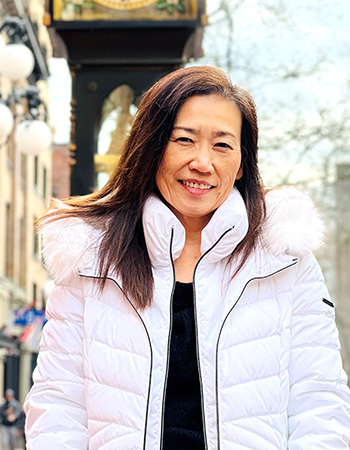
Helen Tsang rediscovered writing through OLLI-UW.
For Helen Tsang, the path to memoir writing began after retirement. A former software engineer, she enrolled in Ronit Plank's OLLI-UW course, “Writing a Memoir: Your Story of Becoming,” to revisit a longtime interest in writing and preserve her parents' stories.
“Now that I'm newly retired, this is the time to turn my attention to some other areas that I've neglected,” Helen says. “The love for writing has always been a part of me ever since I was a kid, and I never got a chance to really pay attention to it.”
Through OLLI-UW, she found both the structure and encouragement to return to that interest alongside other learners doing the same. “Most people have many aspirations and loves throughout their lives, and a lot of times things get in the way, right? Family needs, your career,” says Helen. “This OLLI-UW course has been a great inspiration and way to help pull people together to do that.”
That sense of connection became one of the most meaningful parts of the experience. “I enjoyed the class interaction and how people were very open to sharing,” says Helen. “I think that was the best part.”
The class also provided the structure Helen needed to move from intention to action. “I think it's a way to kickstart something,” she says. “Without taking a class, I wouldn’t focus on learning. This gets you focusing, gets you started and gets your feet wet.” Through writing assignments, class discussions and regular encouragement, Helen began turning ideas she had carried for years into a story she could develop.
Ronit's teaching style helped make that possible. “Some teachers come in with the assumption that you already know something about writing and kind of go from there,” she explains. "Ronit welcomes people from all levels.”
Searching for Answers
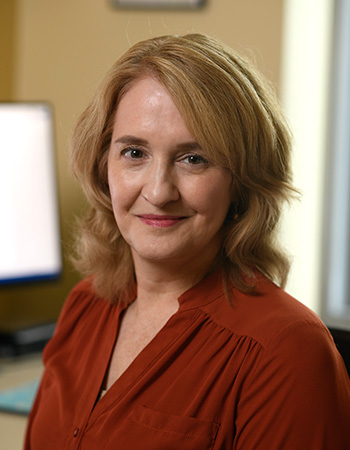
Dr. Kristina Adams Waldorf transformed experience into memoir through UWPCE.
While OLLI-UW learners like Helen often use memoir to reflect on a lifetime of experiences, UWPCE students such as Dr. Kristina Adams Waldorf may turn to writing as they navigate pivotal moments in real time.
For more than two decades, Kristina, a professor of obstetrics and gynecology and adjunct professor of global health at UW, wrote scientific articles and conducted research. Then doctors diagnosed her husband with male breast cancer. Suddenly, she was experiencing healthcare from the patient's perspective rather than the physician's.
To process the experience, Kristina began writing personal essays. When she discovered Ronit's UWPCE course, “Memoir Writing: Finding Your Story,” she realized those essays were becoming something larger. “The more that I wrote about my own experience, the more that I learned about myself,” Kristina says. “It was healing and put me in touch with a desire to write creatively that I have never had a good outlet for.”
Unlike the scientific writing she spent decades producing, writing memoir let Kristina explore questions rather than provide answers. What began as a personal writing exercise eventually became a completed manuscript. Today, she is seeking publication.
“At one point, I was embarrassed that I was writing a memoir,” she laughs. “Now I'm very proud that I've written a memoir and have begun writing a second one, which is really a testament to the positive impact of Ronit’s class.”
More Than a Writing Program
Through memoir, Ronit's students do more than document their lives. They revisit pivotal moments and often uncover new understanding in the process. For Ronit, watching those discoveries unfold is one of the most rewarding parts of teaching.
“I love connecting with people who may not think their story matters or who never had the opportunity to tell it before,” Ronit says. “Being able to share what I've learned with other writers at the same institution where my own journey began feels incredibly gratifying.”
Years ago, Ronit walked into a UW classroom hoping to learn how to tell stories. Today, through OLLI-UW and UW Professional & Continuing Education, she watches retirees, physicians, caregivers, parents and aspiring writers discover their own. The place that helped Ronit find her voice is now the place where she helps others find theirs.